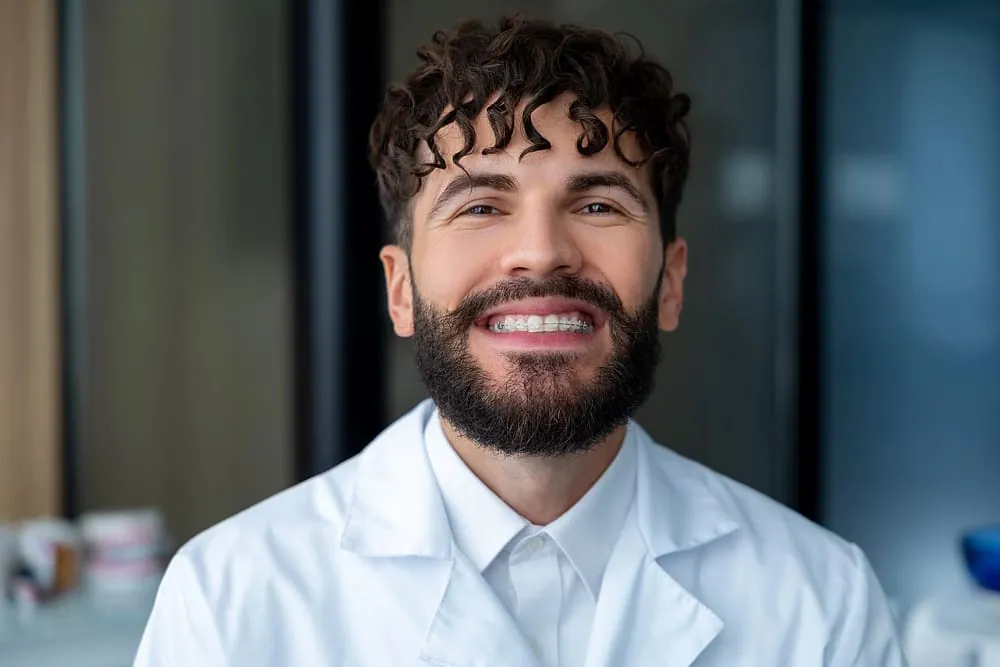
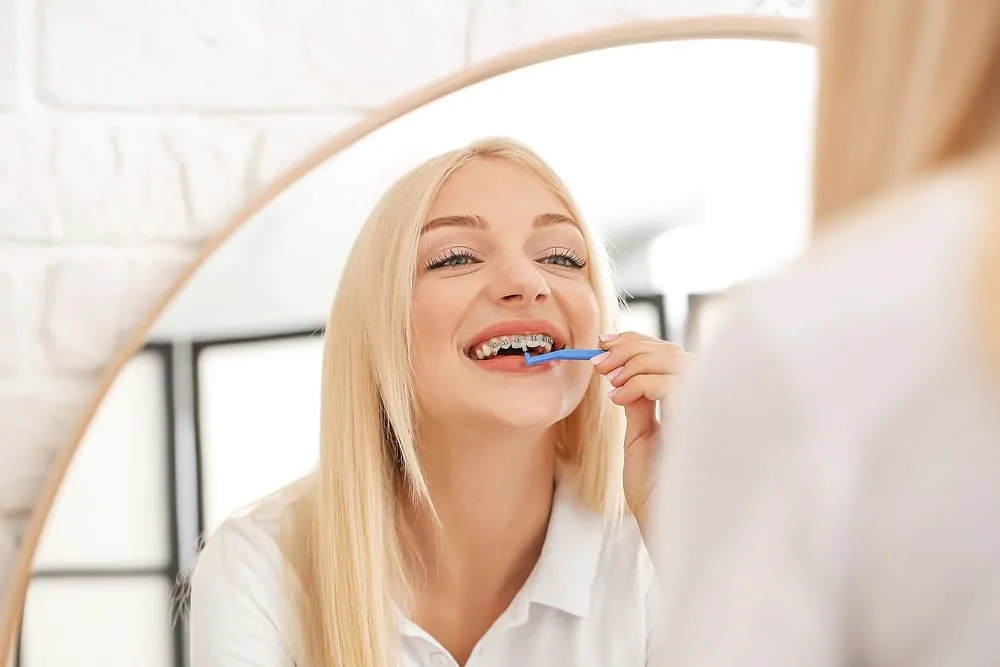
Cosmetic orthodontics is orthodontic treatment chosen mainly to improve how your teeth and smile look, when your bite is not causing a health problem. At Freelove Orthodontics in Kent and Sammamish, WA, the options that are hardest to notice are clear aligners, clear ceramic braces and lingual braces placed behind the teeth.

Even when your goal is cosmetic, the plan starts with a full exam. Dr. Cameron Freelove, a board-certified orthodontist, weighs facial balance, smile esthetics and how your bite works before he recommends treatment.
How cosmetic orthodontics differs from bite correction
Orthodontic treatment moves teeth and corrects how the upper and lower teeth meet. Some people need it for a bite problem, such as a crossbite. Others have a bite that works and want straighter teeth or a more even smile. When appearance is the main reason, the treatment is often called cosmetic orthodontics.
At Freelove Orthodontics, every plan is built from digital records and imaging chosen for your clinical needs, and Dr. Freelove plans your final tooth positions on a digital model before treatment begins.
Why do people want it?
Many patients in their 20s who come to Freelove Orthodontics want to finish the treatment they never had, or to correct teeth that moved after a lost retainer. For patients in their 30s and 40s, shifting after an earlier round of braces is the most common reason Dr. Freelove sees.
Appearance also has a measurable link to well-being. In children and teenagers, problems with how the front teeth line up are linked to lower oral health-related quality of life, mostly in emotional and social well-being [1]. In adults, a 2025 review found that dental self-confidence improved after treatment with braces [2].
What are cosmetic orthodontic treatment options?
Freelove Orthodontics offers three options that are less visible than metal braces, and they can be combined. Adults comparing them can review all three with Dr. Freelove at the same consultation.
| Clear aligners | Clear ceramic braces | Lingual braces | |
|---|---|---|---|
| Where it sits | Clear trays over the teeth | Tooth-colored brackets on the front of the teeth | Brackets bonded to the back of the teeth |
| Removable | Yes, for meals and brushing | No | No |
| Wear | 20 to 22 hours a day, new trays about every 7 days | Always on | Always on |
| Office visits at Freelove | Every 10 to 20 weeks | Every 8 to 12 weeks | Every 12 to 16 weeks |
| Starting price at Freelove | $5,000 (Invisalign or Angel Aligners) | $5,000 | $7,500 |
Clear aligners: Invisalign and Angel Aligners
Clear aligners are thin, removable trays. Each tray is shaped to a tooth position you have not reached yet, so wearing it moves your teeth a small step at a time. You take the trays out to eat and to brush, so meals and your brushing and flossing routine stay the same.
At Freelove Orthodontics, you wear the trays 20 to 22 hours a day and switch to a new set about every 7 days. Dr. Freelove checks your progress in person every 10 to 20 weeks.
The practice offers Invisalign and Angel Aligners. Dr. Freelove prefers Angel Aligners for many cases: the buttons that hold elastics are built into the tray, and he finds the trimline options and planning software suit the way he plans tooth movement. For simpler cases, or fine-tuning after braces, the practice also makes aligners in-house. Compare the brands on the clear aligners page.
Aligners can treat most cases. Dr. Freelove recommends braces as the more predictable tool when a case involves extractions, a deep overbite, precise control of root angles or a severe jaw imbalance. He also weighs whether you can commit to full-time wear. Reviews of the research agree that aligners work well for mild to moderate problems and are less reliable for severe cases and some tooth movements [3].
Clear ceramic braces
Clear ceramic braces move teeth the same way metal braces do, with brackets that are tooth-colored. Freelove Orthodontics uses KLOwen clear brackets, part of the same custom digital system as its metal braces. Each bracket is designed from a scan of your teeth around the final positions Dr. Freelove has planned.
The clear or tooth-shade ties that hold the wire are replaced at every visit. Ceramic is slightly more brittle than stainless steel, so Dr. Freelove occasionally recommends metal on the lower teeth in deep-bite cases, where a bite ramp or very heavy elastic forces would stress the lower brackets. Some patients also choose clear brackets on the upper teeth and metal on the lower, and Dr. Freelove does this when a patient asks.
Lingual braces: InSmile
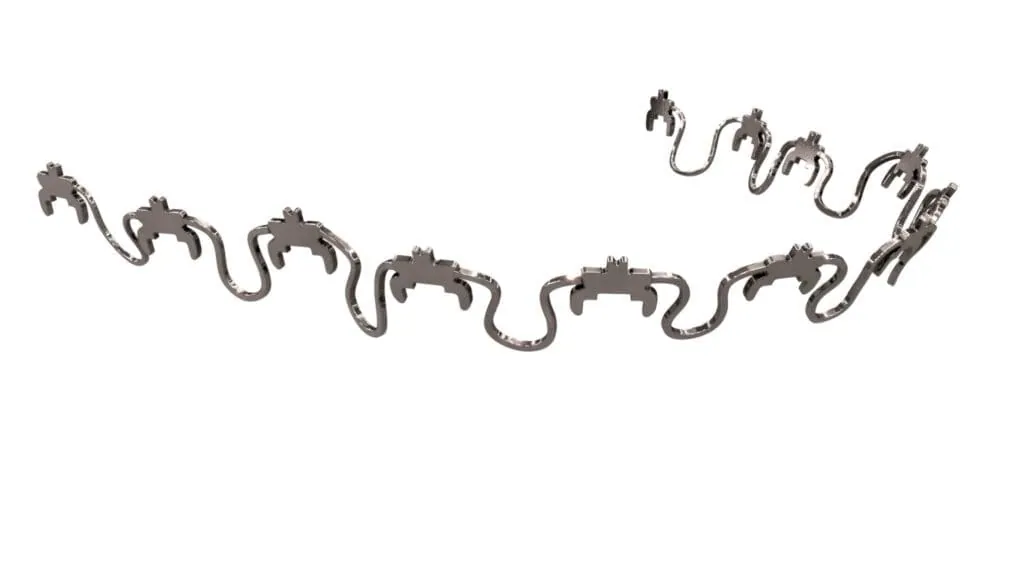
Lingual braces are bonded to the back of the teeth, the side that faces your tongue, so they are out of sight from the front. Freelove Orthodontics offers InSmile (formerly InBrace) lingual braces. Because they stay on, they work without trays to remember, which helps patients who want hidden braces but are unsure about wearing aligners.
Expect your tongue to notice them at first. Compared with braces on the front of the teeth, lingual braces are more likely to cause tongue soreness and speech difficulty, while overall pain is about the same [4]. With InSmile, the speech adjustment usually takes 1 to 4 weeks.
Combining options
Some plans mix appliances. Braces go on the back or lower teeth, where more complex movements are needed, and clear aligners or lingual braces go on the front or upper teeth, where appearance matters most. Many braces cases may also be finished in aligners to fine-tune a few movements.

Healthy teeth and gums come first
A cosmetic plan still starts with a diagnosis. The free consultation includes an exam by Dr. Freelove, a digital scan of your teeth and an airway screening. A CBCT scan (a 3D X-ray) is complimentary when it is clinically indicated. You leave with a written plan and exact pricing.
Dr. Freelove does not recommend treatment when it would do more harm than good. With active gum disease or a very high risk of cavities, treatment waits until those conditions are under control.
Frequently asked questions
Does insurance cover cosmetic orthodontics?
It depends on your plan. Freelove Orthodontics accepts all major PPO orthodontic plans, checks your orthodontic benefit before treatment starts and files the claim for you. Apple Health covers orthodontics only for qualifying severe cases, and the team helps families with the approval paperwork. HSA and FSA funds can be used. Details are on the insurance page.
Can I straighten just a few teeth?
Sometimes. When only part of the bite needs correcting, Dr. Freelove may recommend limited treatment, which costs $2,500 to $4,000 at Freelove Orthodontics. Comprehensive treatment, which corrects the whole bite, ranges from $5,000 to $7,000 depending on how complex the case is. He confirms which one fits your teeth at the free consultation.
Is a mail-order aligner a good idea for a cosmetic fix?
Even a cosmetic change moves teeth, so Dr. Freelove says the health of the teeth, the bone that supports them and the bite all need evaluating first, not only the look of the front teeth. He does not recommend aligners that start without an in-person exam and diagnostic records, or that continue without a licensed clinician supervising them.
Will I need a retainer after cosmetic treatment?
Yes. After treatment, a retainer holds the teeth in their new positions, and a Cochrane review compared the ways of doing that [5]. At Freelove Orthodontics, the first set of retainers is included in the treatment fee, and clear retainers are made in-house on 3D-printed models of your teeth. Dr. Freelove explains how to wear them when your treatment ends. More on the retainers page.
Book a free consultation in Kent or Sammamish
You do not need a health problem to see an orthodontist. Freelove Orthodontics offers a free consultation for new patients not currently in treatment, at its Kent office and its Sammamish office. Call or text Kent at (253) 852-7331 or Sammamish at (425) 651-2778, or book online. In-house payment plans start at $300 down and $199 a month, and paying in full takes 5% off.
References
- Dimberg L, Arnrup K, Bondemark L. The impact of malocclusion on the quality of life among children and adolescents: a systematic review of quantitative studies. European Journal of Orthodontics. 2014. https://consensus.app/papers/details/w:427c82d2-ad2a-4909-83a7-bf15d7265419/?utm_source=claude_desktop
- Johal A, Dunne B, et al. Oral Health-Related Quality of Life (OHRQoL), Pain and Side Effects in Adults Undergoing Different Orthodontic Treatment Modalities: A Systematic Review and Meta-Analysis. Healthcare. 2025. https://consensus.app/papers/details/w:12d1c736-a0a9-4a09-9a7e-fe83a36fdbd7/?utm_source=claude_desktop
- Yassir YA, Nabbat SA, et al. Clinical effectiveness of clear aligner treatment compared to fixed appliance treatment: an overview of systematic reviews. Clinical Oral Investigations. 2022. https://consensus.app/papers/details/w:5d85e97c-66e7-4523-b4ea-1a60707f4a32/?utm_source=claude_desktop
- Long H, Zhou Y, et al. Comparison of adverse effects between lingual and labial orthodontic treatment: a systematic review. The Angle Orthodontist. 2013. https://consensus.app/papers/details/w:06c0c8fa-5f44-4c4e-abba-a006c8d32163/?utm_source=claude_desktop
- Martín C, Littlewood S, et al. Retention procedures for stabilising tooth position after treatment with orthodontic braces. Cochrane Database of Systematic Reviews. 2023. https://consensus.app/papers/details/w:26324791-581f-4d74-ace9-57d5b336d1c2/?utm_source=claude_desktop