
Airway Orthodontics in Kent and Sammamish, WA
Every new patient at Freelove Orthodontics receives an airway screening as part of the first evaluation. Dr. Freelove looks at the airway, jaws, and bite together, not just the teeth, and, when a breathing or sleep problem is suspected, coordinates with your physician for diagnosis. Screening is included in the free consultation.
Reviewed and approved by Dr. Cameron Freelove, DDS, MS · Last updated
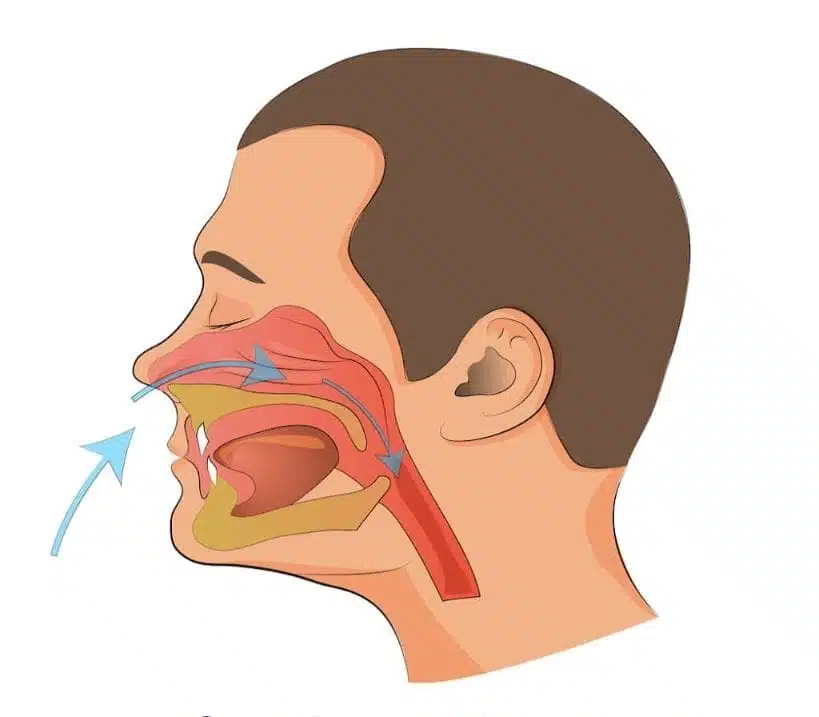
What Is Airway Orthodontics?
Airway-focused orthodontics looks at how the jaws and teeth develop in relation to the space available for breathing. A narrow upper jaw, a lower jaw set back, or crowded teeth can go along with mouth breathing and disrupted sleep, especially in children. Orthodontists cannot diagnose a sleep disorder, but it can screen for warning signs and, working with a physician, make structural changes that support a healthier airway.
How Freelove Assesses the Airway
At Freelove Orthodontics, airway screening is part of every initial evaluation, not an add-on. It includes airway-related questions on the health history, a look at the tonsils, tongue posture, and how the jaws relate, and, when clinically indicated, a review of the CBCT scan, which shows the airway, sinuses, and jaws in one low-dose 3D image. When the screening suggests a possible sleep or breathing problem, Dr. Freelove refers the patient to a physician or sleep specialist for diagnosis.
Treatment by Age: Children, Teens, Adults
Airway problems look different at every age, and the treatment tools change as the jaw matures. The same constriction that responds to an expander in a seven-year-old may require a skeletal anchorage or surgery in the future.
Children
Signs worth screening for include mouth breathing, snoring, restless sleep, a narrow palate, and a persistent open-mouth posture. Early expansion can create room and is easiest while the jaws are still growing.
Teens
Crowding, a recessed lower jaw, and daytime tiredness can all relate to airway. Screening during comprehensive treatment catches these while growth can still be guided.
Adults
Many adults with a narrow maxilla and struggle with nasal breathing can be treated with expansion (MARPE).
Airway Treatment Options at Freelove
| Approach | What it does |
|---|---|
| Palatal expansion / MARPE | Widens a narrow upper jaw to create room across the arch. |
| Growth guidance (Herbst) | Guides a set-back lower jaw forward during the growth window. |
| Orthognathic surgery | Advancement of one or both jaws to increase the pharyngeal airway space (coordinated with an oral surgeon) |
| Oral appliance (mandibular advancement) | A custom device worn during sleep that holds the lower jaw forward, for adults with mild sleep-disordered breathing, coordinated with the sleep physician who makes the diagnosis. |
| Referral | Coordination with a physician, ENT, or sleep specialist for diagnosis. |
Who Dr. Freelove Coordinates With
Orthodontists do not diagnose or treat sleep apnea on its own. When Dr. Freelove’s screening raises a concern, he coordinates with the patient’s pediatrician, ENT, or a sleep physician, who make the diagnosis. Orthodontic treatment, such as widening a narrow upper jaw or guiding jaw growth, is then used as part of a plan the medical team directs.
This keeps each provider in their lane: the physician diagnoses and owns the sleep condition, and orthodontics contributes the structural changes it is equipped to make.
Freelove does not diagnose sleep apnea. The iCat 3D CBCT scanner scan identifies structural airway risk factors, but imaging cannot measure breathing events during sleep. Only a sleep study ordered by a physician can diagnose obstructive sleep apnea. Dr. Freelove screens, refers, and coordinates, the diagnosis comes from a sleep medicine physician or ENT.
What Airway Orthodontics Does Not Do
Straightforward, no-upsell boundaries on what orthodontic treatment can and cannot accomplish for airway and sleep concerns.
It is worth being clear about what orthodontics can and cannot do for the airway.
- Orthodontists can screen for warning signs, take a 3D image of the airway and jaws, and make structural changes such as widening a narrow jaw or guiding jaw growth.
- Orthodontists cannot diagnose sleep apnea or replace a sleep study. A diagnosis of a sleep or breathing disorder is made by a physician.
Freelove Orthodontics works within those boundaries and refers out for diagnosis whenever a concern is found.
Snoring & Sleep Apnea Appliances
Airway Treatment Cost at Freelove
Airway screening is included in the free consultation. When orthodontic treatment such as expansion is recommended, it is priced as part of the overall case. Payment options include In-House Financing (from $199/month), CareCredit (0% APR promotional financing, $0 down for approved credit), a 5% pay-in-full discount, and HSA or FSA funds.
Why Freelove for Airway Orthodontics
Dr. Freelove came to orthodontics from a bioengineering background and has pursued dedicated continuing education in airway, malocclusion, and interceptive orthodontics. Airway screening is built into every new-patient evaluation, and, when clinically indicated at the consultation, a CBCT scan is taken at no charge so the airway and jaws can be seen in 3D. When treatment is indicated, MARPE and other expansion are placed in-house.
Just as important is knowing the limits: orthodontics screens and creates structural room, while diagnosis stays with the medical team.
Airway Orthodontics FAQs
Does an orthodontist treat sleep apnea?
No. A physician diagnoses and owns a sleep condition. Orthodontists can screen for warning signs and, as part of a medical plan, make structural changes such as widening a narrow upper jaw.
What does airway screening involve?
Airway questions on the health history, a look at the tonsils, tongue posture, and jaw relationship, and a review of the CBCT scan when clinically indicated. If something suggests a sleep or breathing problem, Dr. Freelove refers you to a physician.
Can expansion help my child breathe better?
Expanding a narrow upper jaw can create more room across the arch and increase the nasal airway space. This can successfully treat many airway concerns however airway health is multi-factorial and should be considered through a comprehensive lens. Expansion alone may alleviate symptoms or may be part of a comprehensive medical plan.
Common Routes from Airway Evaluation
Patients researching airway-focused orthodontics often arrive after a sleep study, an ENT consult, or a child’s pediatric dental check-up. The next page depends on the question.
- Children with chronic mouth breathing often need a palatal expander to widen the nasal floor.
- Adults with mild sleep-disordered breathing may benefit from a custom airway appliance (mandibular advancement device) coordinated with a sleep medicine physician.
- Older teens and adults with an interdigitated, expansion-resistant suture: MARPE via in-office TADs bypasses the surgical-suture-opening step.
- Severe skeletal cases that exceed orthodontic scope: surgical-orthodontic coordination with an oral-maxillofacial surgeon.
- Phase 1 children’s evaluations: children’s orthodontics covers age-7 screening protocol.
- Ready to schedule? Schedule a free airway-screening consultation.
Concerned About Breathing or Sleep?
Free airway evaluation includes jaw and airway assessment, and a plain-language explanation of what Dr. Freelove sees, for a child, a teen, or an adult.