
TMJ Mouth Guard in Kent and Sammamish
Jaw pain, grinding, and clenching deserve an honest evaluation before anyone sells an appliance. Dr. Freelove starts conservative: a clinical exam, digital bite records, and CBCT imaging, then a custom splint when a splint is the right tool and a specialist referral when it is not.
Reviewed and approved by Dr. Cameron Freelove, DDS, MS · Last updated
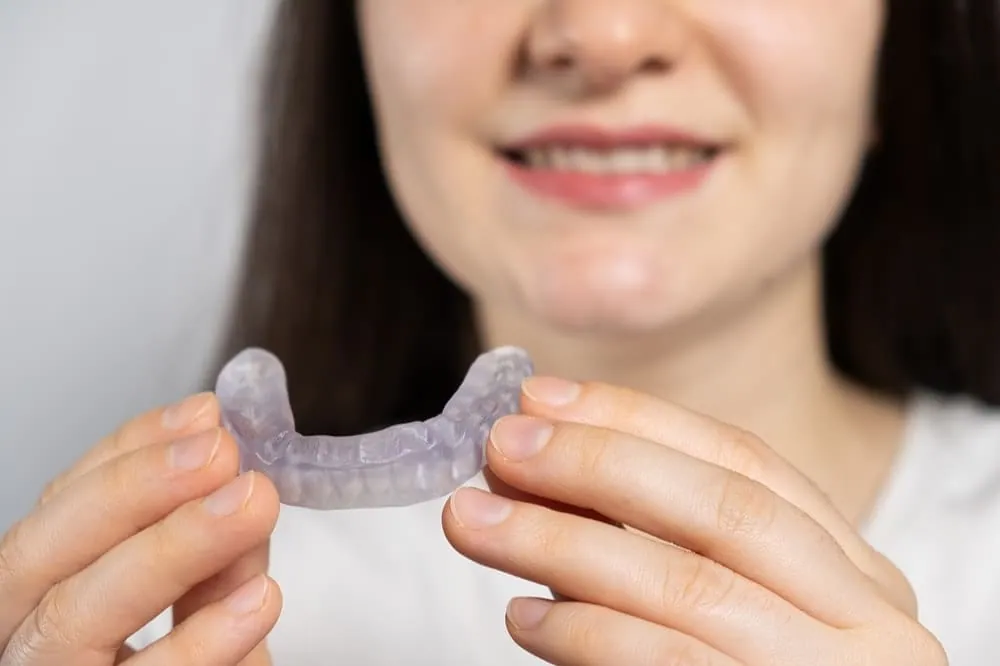
Two Appliances, Two Very Different Jobs
Patients often use the words mouth guard for two very different appliances. A TMJ stabilization splint treats jaw-joint and muscle symptoms such as grinding, clenching, and morning jaw soreness. A sports mouthguard protects teeth from impact during contact play. Dr. Freelove fits TMJ stabilization splints. The right choice starts with an exam, not a catalog.
1. TMJ Stabilization Splint
A stabilization splint is a custom-fitted rigid appliance made from a digital scan of the patient’s teeth. Worn primarily at night, it separates the teeth slightly, helps overworked jaw muscles relax, and spreads grinding forces so teeth, restorations, and joints are protected while symptoms settle. Dr. Freelove calibrates the bite contacts on the splint himself.
2. Sports Mouthguard
A sports mouthguard is a thicker, shock-absorbing appliance designed to cushion impact and stay put during contact play. It is a different appliance with a different job: a TMJ splint should not be worn for sports, and a sports guard does not treat jaw symptoms. Freelove Orthodontics can have a sportsguard fabricated from a trusted partner lab using an intraoral scan of the patient’s teeth.
When a TMJ Splint Is Indicated
A splint is not the answer to every jaw complaint, so Dr. Freelove looks for specific findings before recommending one. The patterns below are the most common reasons a TMJ splint earns a place in a treatment plan.
How a Freelove TMJ Splint Is Fabricated
Every splint at Freelove Orthodontics & Smile Design starts with data rather than a guess: a clinical exam, digital bite records captured with an intraoral scanner, and 3D imaging when indicated. The steps below walk through the process from first exam to follow-up.
-
Clinical Exam & Bite Analysis
Dr. Freelove examines the jaw muscles, joint sounds, range of motion, and bite contacts, and reviews when the symptoms occur: mornings, evenings, or under stress. This exam determines whether a splint is indicated at all, and it happens before any appliance is discussed.
-
iCat 3D CBCT scanner Joint Imaging
When clinically indicated, the in-office CBCT scan, complimentary at the consultation, captures the jaw joints and surrounding anatomy in 3D. It helps Dr. Freelove distinguish muscle-driven symptoms from joint findings that call for a specialist’s input before splint therapy begins.
-
Aoralscan 3 Digital Impression
A hand-held intraoral scanner captures a precise digital model of both arches and how they bite together, replacing putty impressions for this record. That digital bite record is what drives the fit and the contact scheme of the finished splint.
-
Lab Fabrication
The splint is fabricated at a trusted dental lab in a durable hard acrylic, then returned for a fitting appointment where Dr. Freelove checks and refines the bite.
-
Delivery & Calibration
At delivery, Dr. Freelove seats the splint and adjusts the bite contacts until they are even and comfortable. A splint only does its therapeutic job when those contacts are calibrated precisely, so this appointment is about accuracy, not speed.
-
Follow-Up Protocol
Follow-up visits confirm the splint is relieving symptoms and let Dr. Freelove recalibrate contacts as the muscles settle. If symptoms do not respond as expected, he re-evaluates the diagnosis rather than simply remaking the appliance.
Custom Splint vs. Drugstore Night Guard
| Custom TMJ Splint | Drugstore Night Guard | |
|---|---|---|
| Fit | Made from a digital scan of the patient’s own teeth | Boil-and-bite approximation |
| Bite contacts | Calibrated and adjusted by Dr. Freelove | Uncontrolled; contacts land wherever the material settles |
| Material | Rigid and durable, designed for grinding load | Soft material some patients end up chewing on |
| Oversight | Exam, imaging when indicated, follow-up, and referral when needed | None |
| Cost | $2,000, quoted before treatment | Low upfront cost, no diagnosis attached |
An over-the-counter guard can be a stopgap for a known grinder. It is not a diagnosis, and it cannot be calibrated. When symptoms involve the joint or the muscles rather than just worn enamel, the evaluation matters more than the appliance.
What a TMJ Splint Cannot Do
A splint manages symptoms and protects teeth; it does not permanently reposition the jaw, rebuild joint structures, or resolve every source of facial pain. Some TMJ symptoms are driven by conditions a splint cannot address, which is why Dr. Freelove treats the splint as one tool inside a diagnosis-first approach rather than a universal fix.
When Freelove Refers Out
Dr. Freelove’s approach is referral-first when findings fall outside orthodontic scope. Persistent joint pain that does not respond to conservative care, suspected joint changes on imaging, locking episodes, or sleep-breathing concerns prompt coordination with the right specialist rather than another appliance.
The practice works with oral surgeons in the community and coordinates with local ENTs for airway and sleep-disordered breathing evaluations. Patients leave with a named next step, not a dead end.
How Much Does a TMJ Mouth Guard Cost?
Standalone TMJ Stabilization Splint: $2,000
Flat fee. Includes a digital scan, a lab-made hard acrylic splint, the fitting appointment, and follow-up TMD care. For patients whose primary concern is mechanical protection of teeth and restorations from grinding load.
TMJ Splint Therapy Program: $2,000 per 3-month cycle
Includes the custom splint, three in-office calibration and monitoring visits with Dr. Freelove, targeted muscle and range-of-motion reassessment, and written home-care instructions. Renewable only when clinically warranted. For patients whose TMJ symptoms benefit from structured follow-up beyond a single fitting.
A standalone TMJ splint at Freelove Orthodontics & Smile Design is $2,000. The consultation is free and includes CBCT imaging at no charge when clinically indicated, so patients receive a firm written quote before committing. HSA and FSA funds are accepted, and the team provides complimentary insurance verification; coverage for splints varies by plan.
Frequently Asked Questions
How much does a TMJ splint cost at Freelove Orthodontics?
A standalone TMJ splint is $2,000. The consultation is free and includes CBCT imaging at no charge when clinically indicated, so the exact fee is quoted in writing before treatment starts.
Will a splint cure my TMJ problems?
A splint manages symptoms and protects teeth and restorations; it is not a cure for every source of jaw pain. Dr. Freelove uses a diagnosis-first approach, and when findings fall outside orthodontic scope he coordinates a referral rather than selling another appliance.
How are the bite records for the splint taken?
With a hand-held intraoral scanner that captures a digital model of both arches and how they bite together, replacing putty impressions for this record. CBCT imaging of the joints is included at no charge at the consultation when indicated.
When would Dr. Freelove refer me to another specialist?
Persistent joint pain that does not respond to conservative care, suspected joint changes on imaging, locking episodes, or sleep-breathing concerns. The practice coordinates with community oral surgeons and with local ENTs for airway and sleep evaluations.
Does insurance cover a TMJ splint?
Coverage varies by plan. The team provides complimentary insurance verification before treatment, files claims as a courtesy, and accepts HSA and FSA funds.
Related Appliances & Conditions
Protect Your Teeth and Joints, Without Oversell
A Freelove consultation includes a clinical muscle and joint exam, a digital bite scan, and a written recommendation that names the splint when a splint is right, and names a referral when it is not.