
Open Bite Treatment in Kent and Sammamish
Reviewed and approved by Dr. Cameron Freelove, DDS, MS · Last updated
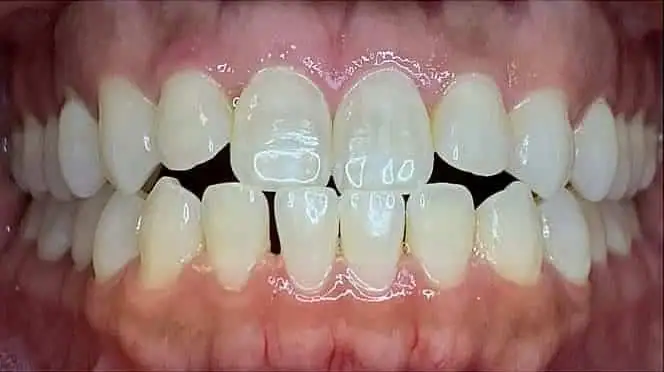
What Is an Open Bite?
An open bite is a type of malocclusion where some teeth do not touch when the jaw is fully closed. Instead of the upper and lower teeth meeting, a gap remains open even when the person bites down.
The gap can show up between the front teeth, the back teeth, or both. It affects how a person bites food, how certain sounds are pronounced, and how the teeth wear over time.
Open bite is different from an overbite or underbite, which describe how far the front teeth overlap. An open bite means the teeth do not close together at all in the affected area.
Anterior vs. Posterior Open Bite
Open bites are classified by where the gap sits.
- Anterior open bite: the front teeth do not touch when the back teeth are closed together. A gap is visible between the upper and lower front teeth.
- Posterior open bite: the back teeth do not meet, even though the front teeth may touch normally.
Anterior open bite is the more common pattern, especially in children and teens. Posterior open bite is less common and often points to a skeletal cause.
Dental Open Bite vs. Skeletal Open Bite
Open bites also fall into two categories based on what is causing them.
- Dental open bite: the teeth themselves are out of position, often because a habit like thumb sucking or tongue thrust pushed them out of alignment. The jaw bones are normal.
- Skeletal open bite: the jaw bones grew in a pattern that creates the gap, sometimes called vertical maxillary excess, where the upper jaw grows too far down and forward.
This distinction matters because it drives the treatment plan. A dental open bite can often be corrected with aligners or braces alone. A skeletal open bite may need additional mechanics, and in severe adult cases, surgical coordination.
What Causes an Open Bite?
Several factors can cause or contribute to an open bite, and more than one is often at play.
- Tongue thrust: a swallowing pattern where the tongue pushes against or between the front teeth instead of against the roof of the mouth.
- Prolonged thumb or pacifier habits: sustained sucking habits past the toddler years can push the front teeth apart as the jaw develops.
- Mouth breathing or airway issues: breathing through the mouth instead of the nose can influence how the jaws and teeth develop over time.
- Jaw growth pattern: some children and teens grow with a vertical jaw pattern that creates a skeletal open bite regardless of habits.
The Freelove Approach to Open Bite
Open bite treatment fails when it ignores the cause. When clinically indicated, the free consultation includes the iCat CBCT scan with Invivo airway analysis, so Dr. Freelove can tell a habit-driven open bite from a skeletal growth pattern and check whether the airway is part of the picture. The treatment plan follows that diagnosis.
Treatment Options, Matched to the Cause
There is no single fix for an open bite. Dr. Freelove matches the treatment to the cause identified in diagnosis.
- Habit correction: addressing thumb, pacifier, or tongue thrust habits is often part of the plan, especially in growing children.
- Clear aligners or braces: Invisalign and braces can close a dental open bite with the right mechanics and tooth movements. Comprehensive treatment starts at $5,000.
- TADs (temporary anchorage devices): in skeletal cases, TADs are mini-screws placed in-office to intrude, or move up, the back teeth, closing the bite without surgery. TADs are priced at the comprehensive fee plus $500.
- Surgical coordination: for severe skeletal open bites in adults, Dr. Freelove plans and runs the orthodontic phase and coordinates with an oral and maxillofacial surgeon for the surgical portion.
How Freelove Diagnoses Open Bite
At Freelove Orthodontics, an iCat 3D CBCT scan is complimentary when clinically indicated at the consultation. The scan captures the teeth, roots, jaws, and airway in full 3D.
Because the scan includes airway analysis, Dr. Freelove can see whether an open bite is dental or skeletal, and whether an airway issue such as mouth breathing may be contributing to it.
Dr. Freelove personally reviews every image and explains the findings before recommending a treatment path.
Stability Protocol, Cause, Mechanics, Retention
Open bites can relapse, meaning the gap reopens after treatment, if the underlying cause was never addressed. Closing the teeth without dealing with the cause tends not to hold.
Dr. Freelove treats the cause first, whether that means addressing a habit or an airway concern identified on the CBCT scan, then applies the tooth movement mechanics needed to close the bite.
Every case finishes with a set of upper and lower removable clear retainers, made in-house, with the first set included. Dr. Freelove recommends nighttime wear for life to hold the result.
Retention After Open Bite Correction
Open bite is among the more relapse-prone patterns, so retention is planned from the start. Every case finishes with upper and lower clear retainers, first set included, and Dr. Freelove recommends nighttime wear for life. Where a tongue habit contributed, holding the new habit pattern matters as much as the retainer itself.
Treatment Options for Open Bite
| Treatment | Best For | Mechanism | Starting Price |
|---|---|---|---|
| Metal Braces + Vertical Elastics | Inadequate incisal display (When upper front teeth are covered by the upper lip) | Anterior extrusion + elastics + habit correction | $5,000 |
| Clear Ceramic Braces | Aesthetic preference | Same mechanics as metal braces | $5,000 |
| Invisalign | Mild-to-moderate dental open bite | Anterior extrusion + posterior intrusion with attachments | $5,000 |
| Angel Aligners ← Primary Aligner | Mild-to-moderate dental open bite | Anterior extrusion + posterior intrusion with attachments | $5,000 |
| TADs | Skeletal open bites with vertical maxillary excess | Combined with braces or clear aligners | Comprehensive fee + $500 |
| Habit Breaker Appliance | Tongue thrust / thumb sucking cases where exercises alone do not resolve | Tongue crib or spur blocks tongue from pressing forward | Included in comprehensive |
| Myofunctional Exercise Protocol | All tongue-thrust open bites | Retrain tongue posture and swallowing pattern | Referred out |
| Orthognathic Surgery | Severe adult skeletal open bite | Surgical reposition of maxilla and/or mandible | Coordinated with oral surgeon |
Typical Treatment Timeline
-
Cause correction
4–12 weeks to habit improvement
Myofunctional exercises begin; airway and tongue-tie addressed if present
-
Mechanical closure
14–22 months
Braces or aligners close the anterior gap with vertical mechanics
-
Detailing
3–6 months
Final bite refinement and settling
-
Retention
Indefinite nights plus daytime tongue posture
Essix retainers with daily biting exercises
What to Expect at the Consultation
The consultation at Freelove Orthodontics is free at every age. It includes a digital scan and airway screening. The iCat 3D CBCT scan is complimentary when clinically indicated, with evaluation of the airway anatomy shown on the scan.
Dr. Freelove personally reviews the images and walks through the treatment options in person, rather than a rotating associate.
Before leaving, patients receive written pricing. There is no obligation and no sales pressure to start treatment that day.
Treatment Examples
See more open bite cases in the smile gallery.
How Much Does Open Bite Treatment Cost?
Metal braces: from $5,000
Clear ceramic braces: from $5,000
Angel Aligners: from $5,000 ← Primary Aligner
Invisalign: from $5,000
Phase 1 (early interceptive treatment, typical age 7–10): Braces from $3,050 · Angel Aligners from $4,500 · Invisalign First from $4,500
Habit breaker appliances are included in comprehensive treatment when clinically indicated. Myofunctional therapy is provided by a referred specialist and billed separately.
Common Appliances Used at Freelove
- Clear aligners (Invisalign or Angel): effective for posterior open bite cases when attachments are added to help move and intrude the back teeth.
- Braces: metal or clear ceramic braces provide the mechanics needed to close a dental open bite.
- TADs: mini-screws placed in-office give the force control needed to intrude teeth in skeletal open bite cases, something braces or aligners alone cannot always achieve.
Frequently Asked Questions About Open Bite
Can an open bite be fixed without jaw surgery?
Many can. Habit-driven and dental open bites often respond to braces or aligners combined with habit control. Skeletal patterns in adults sometimes need coordinated surgery; the CBCT scan shows which category a case falls into before anything starts.
Do thumb-sucking and tongue habits really cause open bite?
Sustained habits can hold the front teeth apart while the back teeth keep erupting, which shapes an anterior open bite over time. Catching the habit early, alongside growth, is part of why an evaluation no later than age 7 matters.
Will an open bite come back after treatment?
It can if retention is treated as optional. Consistent retainer wear and habit control protect the result; Dr. Freelove recommends nighttime retainer wear for life.
Related Conditions
Front Teeth Don’t Touch?
The free consultation at Freelove Orthodontics & Smile Design includes a digital scan, a dental-versus-skeletal classification, a tongue habit and airway assessment, and a three-layer plan for closing the bite and keeping it closed. No obligation. Discounts apply.