
Underbite Treatment in Kent and Sammamish
An underbite means the lower front teeth sit in front of the upper front teeth when the jaws close. Of all bite problems, underbite carries a strong genetic signal and the narrowest treatment window in children. Diagnosis at Freelove Orthodontics & Smile Design starts with a precise skeletal vs. dental classification on CBCT.
Reviewed and approved by Dr. Cameron Freelove, DDS, MS · Last updated
Because the right age and the right mechanism determine whether the correction is straightforward, complex, or surgical.
What Is an Underbite?
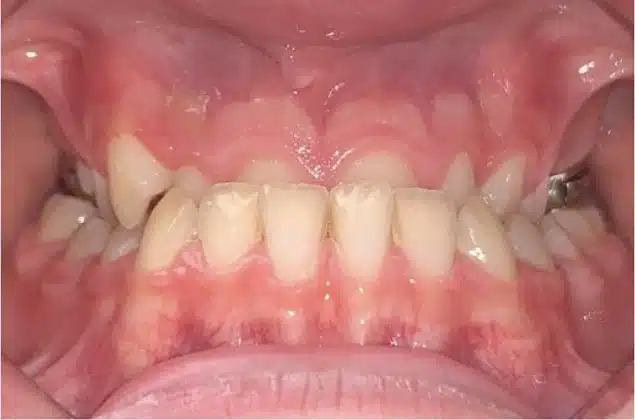
In a healthy bite, the upper front teeth sit slightly in front of the lower front teeth, the upper arch overlaps the lower like a lid over a box. In an underbite, also called a Class III malocclusion, that relationship is reversed: the lower front teeth and often the lower jaw itself sit forward of the upper.
An estimated 1 to 5% of the population is affected, and underbite carries a strong genetic influence. If a parent, grandparent, or sibling had an underbite or jaw surgery, the odds that a child in the family will develop one are significantly higher.
Underbite is not a single condition with a single fix. The cause can be purely dental (only the teeth are tipped wrong), purely skeletal (the jawbones themselves are mismatched), or a combination of both.
That distinction is the most important call an orthodontist makes on this diagnosis, because it determines whether braces alone will do the job, whether growth modification can redirect the jaw in a child, or whether orthognathic surgery will be part of the plan in an adult.
A child who is seven and still growing has options an adult of thirty does not.
Three Types of Underbite, and Why the Classification Drives the Plan
Dr. Freelove combines CBCT imaging with Aoralscan 3 digital scans to evaluate the underlying skeletal and dental relationships and determine the extent to which dental compensation can be achieved safely and predictably. Skipping this step is the single most common source of over-treatment, a dental underbite does not need the same appliance as a skeletal one, and a skeletal case in an adult cannot be solved with the same tools used in a growing child.
Dental Underbite
The jawbones are correctly sized and positioned, but the upper teeth are tipped backward (retroclined), the lower teeth are tipped forward (proclined), or both. The skeletal relationship is normal underneath. Treatment: braces or clear aligners reposition the teeth. This is the simplest form and can be corrected at nearly any age.
Skeletal Underbite
The jawbones themselves are mismatched. Either the upper jaw (maxilla) is underdeveloped, the lower jaw (mandible) is overgrown, or both. This is the most common form, the one with a strong genetic link, and the one most sensitive to treatment timing. In growing children, facemask therapy plus palatal expansion can redirect growth.
In adults, the choice is orthodontic camouflage or orthognathic surgery.
Combined (Most Common)
Skeletal and dental components are both present. The jaws are mismatched and the teeth have compensated by tipping in the opposite direction, the body’s attempt to bring the teeth together despite the jaw discrepancy. Treatment must address both layers: the bone first (in children), then the teeth, or a surgical-orthodontic coordinated plan in adults.
The Critical Treatment Window: Age 10 and Younger
For skeletal underbites, the single most important variable in treatment outcome is timing. At age 10 and younger, the midpalatal suture that runs along the roof of the mouth is more open, and the maxilla is responsive to protraction forces transmitted through the upper jaw.
This is the window when a facemask (reverse-pull headgear) combined with a bonded palatal expander can physically pull the upper jaw forward and redirect facial growth. It is a narrow window, but when it is used well, it can turn a case that would otherwise require surgery into one that needs only braces.
What the Research Shows
A 2024 Cochrane systematic review (29 studies, 1,169 children) found that facemask therapy improved both the bite and the underlying jaw relationship immediately after treatment. Long-term follow-up is more nuanced: skeletal improvements tended to diminish by the three-year mark and appeared largely lost by six years.
However, clinicians consistently judged that children who received early facemask treatment were less likely to require orthognathic surgery in adulthood. Early intervention does not always permanently eliminate the jaw discrepancy, but it very often reduces its severity enough that an adult-stage surgical plan becomes unnecessary.
Family History Matters, Often More Than the Bite Itself at Age 7
Underbite has a strong hereditary pattern. When a parent or grandparent has an underbite or a history of jaw surgery, a child’s risk of developing one is significantly elevated.
A child’s bite at age 7 may still look acceptable even when the underlying growth pattern is already pointing toward Class III. The lower jaw continues to grow through puberty and can outpace the upper jaw, turning a subtle age-10 tendency into a severe age-15 problem.
When there is family history, Dr. Freelove recommends that evaluation happen no later than age 7 regardless of how the child’s bite looks at the time.
Why Dr. Freelove Treats Underbite Early, and Why Restraint Still Matters
Phase 1 helps children who need early intervention for issues like crossbite, harmful habits, tooth impaction from crowding, airway concerns when the upper jaw is not developing enough, and cases that pair with myofunctional therapy for proper tongue function. Not every child who could benefit needs to start early. When waiting for the adult teeth to come in would achieve the same result in one phase instead of two, Freelove Orthodontics recommends watchful observation rather than unnecessary early treatment. Phase 1 should solve a specific problem that would be harder or impossible to fix later.
In practical terms for an underbite: a confirmed skeletal Class III in a child age 10 or younger is one of the clearest indications for Phase 1 treatment. A mild dental tip in a child whose jaws are otherwise well-related often is not, the right answer there can be a complimentary growth-observation recall every six months rather than an immediate appliance. The diagnosis drives the decision.
Treatment Options by Age at Freelove
Children Under 10: Facemask Plus Palatal Expansion (Phase 1)
The gold standard for skeletal underbite in a growing child is the facemask + palatal expander combination. A bonded expander is placed first to widen the upper jaw and loosen the midpalatal suture. The facemask, a padded framework that rests on the forehead and chin, is worn at home and connected to the expander with elastic bands.
Those elastics apply a steady forward pull on the maxilla, redirecting growth of the upper jaw into a more normal anterior position relative to the lower.
At Freelove, a typical Phase 1 underbite protocol runs roughly six to twelve months: two to three weeks of active expansion, followed by retention of the expander while the facemask does its skeletal work, then removal once the bite is corrected and over-corrected slightly to account for continued mandibular growth.
Facemask wear is asked for during evenings and overnight, approximately 12–14 hours per day, and children adapt faster than most parents expect. The appliance is removed for school, sports, and meals.
These appliances are often better tolerated socially because nothing sits outside the mouth, and in cooperative patients they can produce meaningful skeletal change. Dr. Freelove selects the appliance based on the severity of the skeletal discrepancy, the child’s dental development, and, honestly, the family’s assessment of what the child will actually wear consistently.
Teens: MARPE, Braces, Class III Elastics, and Watchful Monitoring
Once the early growth window has slowed down, the skeletal component cannot be changed without skeletal anchorage or surgery. MARPE expansion extends the window of growth. Even adults have had positive orthopedic change with their use. Combined with dental compensation with braces/clear aligners, class III elastics (rubber bands stretched from the upper back teeth to the lower front teeth) tip the upper teeth forward and the lower teeth back relative to the jaws, or TADs, many class 3 bites can be treated non-surgically.
For teens with severe underlying skeletal underbites who are still growing, watchful monitoring through puberty is essential, if the lower jaw continues to outgrow the upper, a surgical plan may become necessary once skeletal maturity is reached.
Waiting to make the final call until growth is complete protects the patient from committing to surgery prematurely.
Adults: Camouflage or Orthognathic Surgery
Orthopedic growth with MARPE and/or orthodontic camouflage is appropriate for adults with mild skeletal underbites. MARPE with or without facemask can produce forward maxillary growth. Braces or clear aligners tip the upper front teeth forward and the lower front teeth back, disguising the jaw discrepancy at the dental level. The jaws themselves do not move without skeletal anchorage.
This works well when the skeletal discrepancy is small (ANB within one to two degrees of normal), the facial profile is acceptable to the patient, and there is no significant functional problem from the bite itself.
Orthognathic surgery is the correct choice for moderate-to-severe adult skeletal underbites. A Le Fort I osteotomy advances the upper jaw, a bilateral sagittal split osteotomy sets back the lower jaw, or both procedures are combined, depending on the analysis.
Orthodontic treatment is done before surgery to align the teeth into position for the jaws to meet correctly after repositioning, and a second phase of orthodontics refines the bite after healing. Dr. Freelove coordinates these cases directly with Kent and Sammamish-area oral and maxillofacial surgeons. Dr. Freelove handles the pre-surgical and post-surgical orthodontics in-house; the surgery itself is performed at the surgeon’s facility.
Where’s the Real Surgery-vs-Ortho Threshold for an Adult Underbite?
Dr. Freelove does not use a single rigid threshold for recommending jaw surgery. The decision depends on the severity of the skeletal discrepancy, facial esthetics, airway considerations, and the patient’s own goals. For a growing patient, growth modification can often correct a skeletal underbite without surgery; for a non-growing patient with a severe skeletal discrepancy, orthodontics is often coordinated with an oral surgeon.
If camouflage will solve the functional complaint and the patient accepts the profile, camouflage wins. If the profile itself is the complaint, or the skeletal discrepancy is severe enough that compensation would put the front teeth out of the supporting bone, surgery is the honest recommendation.
The conversation is explicit; neither option is soft-sold.
What Happens If an Underbite Is Not Treated
Worsening During Puberty
The lower jaw has its largest growth spurt between ages 12 and 16. When the mandible is already long relative to the maxilla, puberty amplifies the discrepancy rather than balancing it. An underbite that was cosmetically mild at age 10 can become functionally severe by age 15, and by then the window for non-surgical growth modification is much less predictable.
Accelerated Tooth Wear
Reversed bite contact loads the upper front teeth against their facial (front) surface rather than the lingual (back) surface they were designed to meet. The enamel on the facial side of upper incisors is thinner, and the forces travel in an unintended direction. Over years, this produces visible wear, chipping, and sensitivity on the upper front teeth.
TMJ Strain and Chronic Jaw Pain
A reversed bite forces the jaw joint into an abnormal closing position. The muscles and ligaments surrounding the joint compensate constantly, and chronic compensation is how many adult TMD cases begin. Clicking, locking, headaches referred from the temporalis and masseter, and limited opening range are typical downstream symptoms.
Many patients who end up on the TMJ page started with an untreated Class III bite.
Speech and Chewing Efficiency
An underbite affects the articulation of “s” and “z” sounds (a frontal lisp) because the tongue cannot close against the upper incisors in the expected way. Chewing efficiency drops because the incisors, the shearing teeth, cannot cleanly cut through food when they meet edge-to-edge or in reverse.
Patients often adapt by chewing exclusively with the molars, which loads those teeth beyond what they were meant to carry.
Facial Profile and Self-Image
A skeletal underbite produces a characteristic concave facial profile: the midface appears flat or sunken, the upper lip loses support, and the chin juts forward. The effect becomes more pronounced as the face matures, because the mandible continues to remodel into late adolescence. For many adults, the profile itself, not the chewing difficulty or the tooth wear, is what finally drives them to seek treatment.
It is a conversation Freelove has often, and one the practice is careful to hold honestly: what ortho can do, what surgery can do, and what each looks like in the mirror at the end.
Treatment Options Comparison
| Treatment | Best For | Mechanism | Price |
|---|---|---|---|
| Facemask + Expander | Children under 10, skeletal | Forward pull on maxilla, midpalatal expansion | Phase 1 fee |
| MARPE + Facemask | 10+ | Forward pull on maxilla, midpalatal expansion | Phase 1 or comprehensive fee + $1,500 |
| Metal Braces | Dental or mild skeletal, teens/adults | Tooth movement + Class III elastics TADs if needed | From $5,000 |
| Clear Ceramic Braces | Dental cases, aesthetic preference | Same mechanics as metal, plus TADs | From $5,000 |
| Invisalign | Mild dental underbite, adult preference | Aligners + Class III elastics TADs if needed | From $5,000 |
| Angel Aligners | Mild dental underbite | Aligners + Class III elastics TADs if needed | From $5,000 |
| Orthognathic Surgery + Braces | Moderate/severe adult skeletal | Le Fort I, BSSO, or bimaxillary; coordinated with oral surgeon | Coordinated with surgeon |
Typical Treatment Timeline
-
Records & classification
1 visit
Digital scans, family history, dental-vs-skeletal determination
-
Phase 1 (skeletal)
6–12 months
Expander + facemask; active forward pull on maxilla
-
Growth monitoring
Every 6–12 months until skeletal maturity
Track mandibular growth through puberty; adjust plan if lower jaw outpaces upper
-
Phase 2 / comprehensive
18–24+ months
MARPE when indicated, braces or aligners with Class III elastics to align teeth in the corrected skeletal position
-
Surgical cases (adults)
9–12 months pre-op, surgery, 6–9 months post-op
Pre-surgical orthodontics at Freelove, surgery with oral surgeon, post-surgical refinement
-
Retention
Nights indefinitely
Underbite has a real relapse tendency; long-term retention is not optional
What to Expect at Your Consultation
-
Digital intake
Family history of underbite (critical for this diagnosis), medical history, patient-stated concerns, bite function, chewing, speech, profile.
-
Comprehensive records
Aoralscan 3 digital scan, clinical photographs.
-
Classification
Dental, skeletal, or combined, determined from digital records and clinically indicated imaging, and confirmed clinically. For growing children, the growth window is mapped explicitly.
-
Treatment options presented with the surgical-vs-ortho threshold explicit
For adults, the camouflage-vs-surgery conversation is held honestly at the first visit. Not hidden inside a treatment plan. Surgical coordination cases are reviewed in detail before any commitment.
-
Exact pricing and financing
Phase 1 fee (if indicated), comprehensive fee, or pre/post-surgical orthodontic fee with the surgical coordination pathway clearly explained.
Treatment Examples
See more underbite cases in the treated cases gallery.
How Much Does Underbite Treatment Cost?
Phase 1 (facemask + expander, under age 10): fee set at consultation, typically well below comprehensive
Comprehensive braces: from $5,000
Clear ceramic braces: from $5,000
Angel Aligners: from $5,000
Invisalign: from $5,000
Orthognathic surgery: The surgical fee is separate and billed by the oral and maxillofacial surgeon. Most medical insurance plans cover orthognathic surgery when functional impairment is documented.
For adult skeletal cases where MARPE is indicated, MARPE adds $1,500 to the comprehensive fee.
Insurance & Financing
Freelove accepts most PPO dental insurance plans and offers in-house financing options for families who qualify. Third-party options (CareCredit) are also available for patients who prefer a longer term, and a pay-in-full discount applies when the full fee is paid at the start of treatment. Insurance details Discounts.
Common Appliances Used at Freelove
Underbite treatment depends on age and on whether the cause is the upper jaw, the lower jaw, or tooth position. Dr. Freelove matches the appliance to the cause shown on the 3D scan.
- MARPE plus facemask. For growing patients, forward pull on the upper jaw combined with palatal expansion can guide a Class III bite. Dr. Freelove places MARPE in-office.
- Braces and clear aligners (Invisalign or Angel Aligners), with Class III elastics to correct the bite relationship.
- TADs. Small mini-screws placed in-office that give braces or aligners the anchorage needed for larger corrections.
- Surgical coordination. For severe skeletal underbites in adults who are no longer growing, Dr. Freelove plans and runs the orthodontic phase and coordinates jaw surgery with an oral surgeon.
Frequently Asked Questions About Underbite
Can an underbite fix itself?
Rarely. A few mild dental underbites involving one or two tipped teeth may self-correct as the permanent dentition settles. Skeletal underbites do not self-correct, and they typically worsen during puberty because the lower jaw continues to grow. Evaluation no later than age 7 is strongly recommended when there is family history.
What is the best age to treat an underbite?
Under age for 10 for skeletal underbites. Facemask plus palatal expansion is most effective before the midpalatal suture becomes interdigitated and resistant to expansion around age 12–14. Dental-only underbites can be treated successfully at nearly any age; the urgency is specifically about the skeletal window.
Is jaw surgery always needed for an underbite?
No. Surgery is reserved for moderate-to-severe skeletal underbites in adults whose growth is complete. Many patients are treated with braces and Class III elastics using dental compensation. Early treatment in growing children often redirects growth enough that surgery becomes unnecessary.
Can braces alone fix an underbite?
Braces can fix dental underbites and camouflage mild skeletal underbites. They cannot change jawbone size or position. Moderate-to-severe adult skeletal underbites require braces combined with orthognathic surgery. Growing children may use braces combined with a facemask and expander.
Can Invisalign fix an underbite?
For mild dental underbites, Invisalign or Angel Aligners can work well, typically with Class III elastics attached to buttons bonded to the teeth. For skeletal underbites, fixed braces give the orthodontist better three-dimensional control. A classification based on digital records and clinically indicated imaging is done before the recommendation is made.
Is facemask treatment uncomfortable for children?
Mild pressure and soreness for the first few days after delivery, similar to adjusting to new braces. The facemask is only worn at home (evenings and overnight) so it does not affect school or activities. Most children adapt within the first two weeks, parents often report that the child adjusts faster than they do.
What if my child’s underbite runs in the family?
Family history is the strongest single predictor for underbite. If a parent, grandparent, or sibling had an underbite or jaw surgery, evaluation no later than age 7 is recommended even if the child’s bite looks acceptable at the time. Proactive monitoring through puberty is essential, because the lower jaw can continue to grow into late adolescence.
Does Freelove coordinate surgical cases?
Yes. Dr. Freelove handles pre-surgical and post-surgical orthodontics in-house while coordinating directly with Kent and Sammamish-area oral and maxillofacial surgeons. Surgical cases are reviewed before treatment begins so the plan, timeline, and insurance pathway are clear from day one.
Related Conditions
Concerned About an Underbite?
A free consultation at Freelove includes a dental-vs-skeletal classification, a review of the growth window if your child is still growing, and an explicit camouflage-vs-surgery conversation if you are an adult. No obligation. Community discounts apply.