
TMJ & Jaw Pain Treatment in Kent and Sammamish
If the jaw clicks, locks, aches on waking, or tires during meals, a temporomandibular disorder (TMJ or TMD) may be driving the pattern. Freelove Orthodontics & Smile Design evaluates and treats TMJ conservatively in Kent and Sammamish and the surrounding communities.
Reviewed and approved by Dr. Cameron Freelove, DDS, MS · Last updated
Starting with behavior modification and a properly calibrated protective splint, escalating to bite correction only when the evaluation shows it is warranted, and referring complex joint pathology to orofacial-pain specialists when that is the right call.
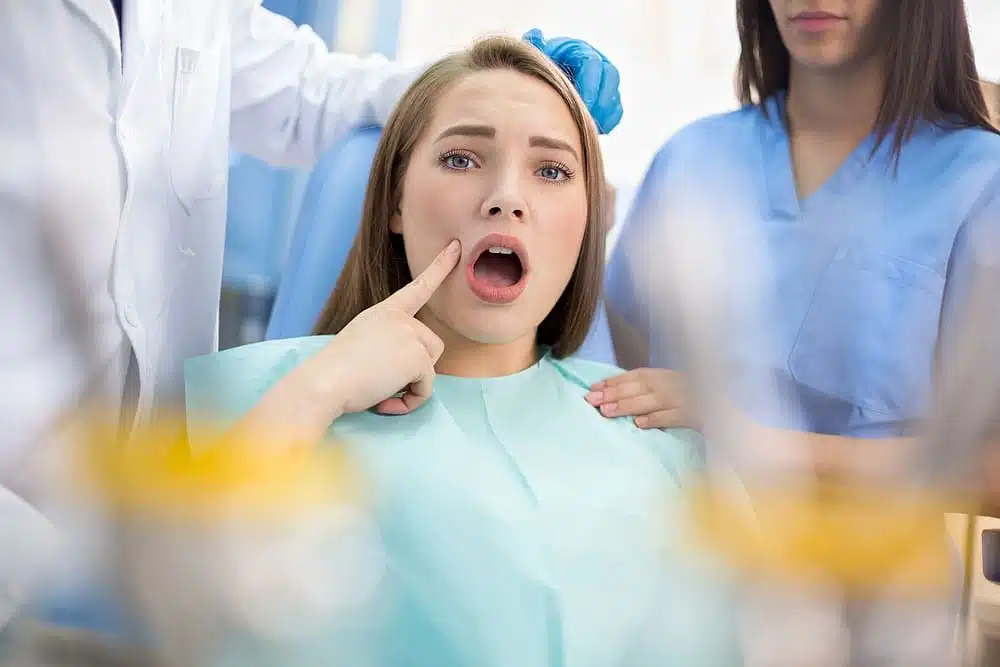
What TMJ and TMD Actually Are
The temporomandibular joint is the hinge that connects the lower jaw to the skull, one on each side just in front of the ear. It is a sliding hinge: the rounded condyle glides along the socket of the temporal bone, and a cartilage disc cushions the motion between them. When any part of that system, the joint, the disc, the surrounding muscles, or the nerves that control them, stops working smoothly, the result is a temporomandibular disorder, abbreviated TMD. "TMJ" in casual conversation usually refers to the same set of symptoms.
TMD is common. Current estimates from the NIH National Institute of Dental and Craniofacial Research (NIDCR) put the adult prevalence at 5 to 12 percent, and women are roughly twice as likely to be affected as men. Most flare-ups are mild and self-limiting.
A smaller group of patients develop chronic pain that interferes with eating, sleeping, or daily focus, and those cases deserve a careful diagnostic workup rather than a one-size-fits-all appliance.
What Causes TMJ Disorders
TMD is almost always multifactorial. A single clean cause is rare; the usual pattern is several contributors stacking on top of one another until the joint, the muscles, or both become symptomatic. The diagnostic workup at Freelove Orthodontics & Smile Design is designed to untangle which of these apply to a given patient, because the right treatment depends on which set of drivers is dominant.
Stress, Clenching, and Parafunctional Habits
Nighttime bruxism and daytime clenching are the most frequent muscle-side contributors. Forward head posture from long days on screens, gum chewing, nail biting, and holding pens between the teeth all add load to the same system. These are reversible behavior patterns, which is why the first line of conservative care targets them directly rather than jumping to an appliance.
Trauma and Joint Injury
A fall, sports impact, motor-vehicle accident, or even prolonged wide opening during a long dental procedure can irritate the joint capsule or displace the disc. Trauma-driven TMD often responds to rest, anti-inflammatories, and short-term splint protection, but persistent post-trauma symptoms warrant imaging.
Bite Discrepancy (Occlusal Contributor)
When the upper and lower teeth do not meet predictably, the jaw muscles compensate by repositioning the condyle into a non-ideal posture. Over months or years, that adapted position stresses the joint and its musculature. A genuine occlusal driver is the scenario where orthodontic bite correction makes sense.
But it is also overdiagnosed, and orthodontics is not a cure for TMD whose dominant drivers are stress, bruxism, or joint-internal pathology.
Joint-Internal Pathology
Disc displacement (with or without reduction), osteoarthritis of the condyle, and rheumatologic conditions such as rheumatoid arthritis can all present as TMD. These are the cases that most often require imaging, specialist involvement, and treatment outside the orthodontic toolkit.
Common TMJ Symptoms
When TMJ Is Orthodontic, and When It Isn’t
One of the most important messages on this page: TMJ is not always an orthodontic problem. The American Academy of Orofacial Pain and the NIDCR both treat TMD as multidisciplinary, spanning dentistry, neurology, physical therapy, sleep medicine, and psychology.
There is no ADA-recognized dental specialty in TMJ, which means no single provider category owns the condition. At Freelove Orthodontics & Smile Design, diagnostic discipline is the guiding principle: orthodontic treatment is recommended only when the evaluation points to a bite driver that orthodontics can genuinely address.
Dr. Freelove’s Conservative TMJ Approach
Dr. Freelove’s default is conservative. A new TMJ patient is worked up with a clinical exam, muscle palpation, range-of-motion measurement, joint-sound assessment, digital bite records, and CBCT imaging of both joints when indicated.
If the dominant driver is muscular or behavioral, treatment starts with behavior modification and a protective splint. If the dominant driver is a joint-internal problem, the case is referred to an orofacial pain specialist or oral surgeon rather than pushed into orthodontics.
If orthodontic bite correction is genuinely indicated, it is planned in the context of the whole mouth.
The practice does not recommend braces or aligners as a "TMJ cure." Orthodontics corrects malocclusion; if the malocclusion is contributing to joint loading, correction can help, but it is not a substitute for addressing stress, bruxism, sleep, or joint pathology.
An Honest Note on TMD Treatment
TMD has several possible causes, so Freelove Orthodontics & Smile Design manages symptoms and treats the drivers it can address rather than promising a cure. Most patients improve with conservative, reversible care; when a case needs a specialist, the practice coordinates that referral.
TMD Care at Freelove
Freelove Orthodontics & Smile Design approaches TMD with conservative in-house care with splints and home guidance.
- Custom occlusal splint or night guard
- At-home care guidance
TMD screening is included at no charge.
Diagnostic Workup at Freelove
Diagnosis precedes treatment. Every new TMJ evaluation at Freelove Orthodontics & Smile Design includes the records below before any appliance is fabricated or any irreversible treatment is recommended.
Treatment Hierarchy: Conservative First, Invasive Last
The NIDCR, the American Academy of Orofacial Pain, and the 2018 Lobbezoo international bruxism consensus all converge on the same principle: TMD should be managed with reversible, low-risk interventions first. Invasive or irreversible steps are reserved for the minority of cases that do not respond to simpler measures. Freelove Orthodontics & Smile Design follows that hierarchy deliberately.
-
Behavior Modification & Self-Care
Soft diet during flares, moist heat on the muscles, jaw rest position (lips together, teeth slightly apart, tongue on the palate), stress management, and posture work. Short-course OTC anti-inflammatories where appropriate. Most acute episodes respond within two to three weeks.
-
Custom Protective / Stabilization Splint
If pain persists or nighttime grinding is clearly present, a custom splint is fabricated at a trusted dental lab from a digital scan taken in the office. The splint protects enamel, restorations, and joint tissues from grinding load and helps deprogram adapted muscle patterns. It is individually calibrated, not a boil-and-bite.
-
Physical Therapy Referral
For muscular TMD that does not resolve with self-care and a splint, a physical therapist trained in TMJ dysfunction can make a material difference. Targeted stretching, manual therapy, posture work, and pain-science education typically yield improvement within six to twelve visits.
-
Orthodontic Bite Correction (Only When Indicated)
If the deprogrammed jaw position reveals a meaningful MI-to-CR shift and the patient’s symptoms map to that discrepancy, comprehensive orthodontic treatment corrects the underlying malocclusion. This is planned after TMJ symptoms are stabilized with conservative care, not as the first step, and never as a speculative "TMJ cure."
-
Specialist Referral
Orofacial pain specialists, oral surgeons, and rheumatologists handle the cases that sit outside what orthodontics can help with: advanced disc pathology, degenerative joint disease, and systemic conditions. Freelove Orthodontics & Smile Design refers openly and coordinates rather than competing with these providers.
-
Surgical Intervention (Last Resort)
Arthrocentesis, arthroscopy, and open-joint surgery are reserved for a very small fraction of TMD cases, documented disc pathology or degenerative joint disease that has failed conservative and specialist-managed care. Surgical options are coordinated with a TMJ-focused oral surgeon. They are not the starting point, and they are not offered in-house.
The Truth About Teeth Grinding and TMJ
The 2018 international consensus on bruxism (Lobbezoo et al.) clarified that grinding is driven by the central nervous system, not by the way the teeth happen to meet.
Bruxism is associated with stress, anxiety, sleep disorders, obstructive sleep apnea, restless leg syndrome, and certain medications including SSRIs, SNRIs, and stimulants. A Cochrane review and a 2022 systematic review both concluded that occlusal splints do not treat bruxism itself.
A well-calibrated custom splint still earns its place in the treatment plan. It functions like a shin guard: it protects enamel, restorations, existing orthodontic work, and the joint from grinding load, and it often reduces morning muscle soreness even when the grinding behavior continues.
But if the grinding is driven by untreated sleep apnea, an SSRI, or chronic stress, the durable solution is addressing that underlying cause.
Not wearing a splint indefinitely. Freelove Orthodontics & Smile Design flags suspected sleep-disordered breathing on CBCT airway screening and refers to ENT, sleep-medicine, or pulmonology when the findings warrant it.
Typical Treatment Timeline
-
Consultation & diagnostic workup
1 visit
Clinical exam, history, digital records, CBCT of both joints, bite analysis.
-
Behavior modification & self-care
2–4 weeks
Posture, soft diet during flares, stress work, short-course anti-inflammatories where appropriate.
-
Splint fabrication & calibration
1–3 visits, 3 months wear
Custom splint from a digital scan, periodic adjustments, nighttime wear.
-
Re-evaluation
At 3 months
Symptom check, bite re-assessment, decision on next step.
-
Orthodontic bite correction (if indicated)
12–24 months
Braces or aligners to address a genuine occlusal contributor.
What to Expect at the Consultation
-
Intake
Pain history, triggers, sleep quality, medications, trauma, and stress.
-
Records
Digital intraoral scan, bite registration, CBCT of both TMJs when indicated, clinical muscle and joint exam.
-
Diagnosis
Dr. Freelove works through the records and identifies whether the driver is muscular, occlusal, joint-internal, or combined.
-
Conservative-first plan
Reversible interventions are proposed before any irreversible treatment. Expected timelines and decision points are spelled out at the visit.
-
Transparent pricing
Exact splint, program, and (if ever indicated) orthodontic fees provided in writing. Medical vs dental insurance implications clarified.
How Much Does TMJ Treatment Cost?
Standalone TMJ splint: $2,000
Includes fabrication from a digital scan, fitting, and adjustment visits. Custom calibrated; not a boil-and-bite.
TMJ evaluation & splint therapy program: $2,000 per 3-month cycle
Includes comprehensive evaluation, splint therapy, ongoing bite monitoring, and review at 3 months. Renewable only if clinically warranted.
Orthodontic bite correction (only if genuinely indicated):
Braces from $5,000 comprehensive · Angel Aligners from $5,000 comprehensive · Invisalign from $5,000 comprehensive. Splint and program fees are separate from any comprehensive orthodontic fee.
Calculate Orthodontic Treatment Cost
Comprehensive orthodontic treatment is covered under dental insurance when a benefit applies. Dr. Freelove verifies both before any treatment is started.
Red Flags, See a Specialist Directly
- The jaw locks open or closed and cannot be released manually.
- Pain is severe enough to interrupt sleep or daily activities for more than a week.
- Swelling, fever, or other signs of infection around the joint.
- Jaw pain following significant trauma (fall, sports impact, motor vehicle accident).
- Unexplained weight loss, ear drainage, facial numbness, or neurologic signs.
- Self-care and a custom splint have been tried for four or more weeks with no improvement.
In any of these scenarios, a call to the office is the fastest path to the right referral.
Common Appliances Used at Freelove
Most jaw-joint complaints are managed with a custom splint and conservative care, not braces. Dr. Freelove evaluates the joint, muscles, and bite before recommending any appliance.
- Custom stabilization splint (standalone, $2,000). A rigid, precisely fitted appliance built from a digital scan and CBCT imaging. It protects the teeth and joint from grinding load and often eases morning muscle soreness.
- Braces or clear aligners. Used only when an uneven bite is contributing to the joint strain and correcting it is part of the plan. Any orthodontic fee is separate from the splint program.
Frequently Asked Questions About TMJ
Can an orthodontist treat TMJ?
In specific situations, yes. There is no ADA-recognized dental specialty in TMD, which is why the condition is handled across multiple disciplines.
When a patient’s TMD is driven by a clear bite discrepancy, an orthodontist with advanced training is a reasonable provider. Freelove Orthodontics & Smile Design brings diagnostic depth from Dr. Freelove’s clinical training. That depth helps distinguish bite-driven TMD from the many cases that are not and to refer the latter appropriately.
Will braces or Invisalign fix my TMJ?
Almost never as a stand-alone promise. Orthodontics treats malocclusion. In the minority of cases where a genuine bite discrepancy is contributing to joint loading, orthodontic treatment can help, but only after TMD symptoms are stabilized with conservative care, and only when the workup supports it. Freelove Orthodontics & Smile Design does not recommend orthodontic treatment as a “TMJ cure.”
Does TMJ go away on its own?
Often, yes. The majority of acute TMD episodes resolve within two to three weeks of self-care: soft diet, moist heat, short-course anti-inflammatories, stress management, and avoiding wide jaw movements. If pain persists beyond three weeks, recurs frequently, or is accompanied by locking, professional evaluation is the right next step.
Does grinding cause TMJ problems?
Bruxism is associated with TMD but is centrally mediated, the brain, not the bite, per the 2018 Lobbezoo consensus. It is tied to stress, sleep disorders, sleep apnea, and certain medications. A custom splint protects teeth and joints from grinding load but does not stop the grinding itself.
Durable management usually requires addressing the underlying driver, which is why Freelove Orthodontics & Smile Design screens for sleep-disordered breathing at every TMJ workup.
Can painless clicking be a problem?
Pain-free jaw clicking is common and generally benign per NIDCR guidance, monitor rather than treat. If clicking progresses to catching, locking, or pain, an evaluation becomes appropriate.
Is an over-the-counter night guard okay?
For short-term tooth protection, a well-fitting OTC guard can be acceptable. For diagnosed or suspected TMD specifically, boil-and-bite OTC guards are not recommended: they are not individually calibrated and can worsen symptoms by forcing the jaw into a non-ideal position. A custom splint fabricated from a digital scan is what the evidence supports.
How much does TMJ treatment cost?
Standalone custom TMJ splint: $2000. Evaluation + splint therapy program: $2,000 per 3-month cycle. If orthodontic bite correction is genuinely indicated, braces start at $5,000. Splint and program fees are separate from any comprehensive orthodontic fee.
Is TMJ treatment covered by medical or dental insurance?
TMJ splints are sometimes covered under medical insurance (as a medical condition), not dental. Comprehensive orthodontic treatment, when warranted, is covered under dental insurance where a benefit applies. Freelove Orthodontics & Smile Design verifies both before any treatment begins.
Does Freelove offer TMJ surgery?
No. Arthrocentesis, arthroscopy, and open-joint procedures are coordinated with a TMJ-focused oral surgeon when the workup indicates them. Surgery is a last-resort option reserved for a small subset of patients whose joint pathology has failed conservative and specialist care.
Related Conditions & Appliances
Tired of Jaw Pain?
A Freelove Orthodontics & Smile Design TMJ consultation includes a pain and history intake, a clinical muscle and joint exam, CBCT imaging of both joints when indicated, digital bite records, and a clear written explanation of what is driving the symptoms. Community discounts apply to comprehensive orthodontic fees when ortho is indicated.