
Crowded Teeth Treatment in Kent and Sammamish
Reviewed and approved by Dr. Cameron Freelove, DDS, MS · Last updated
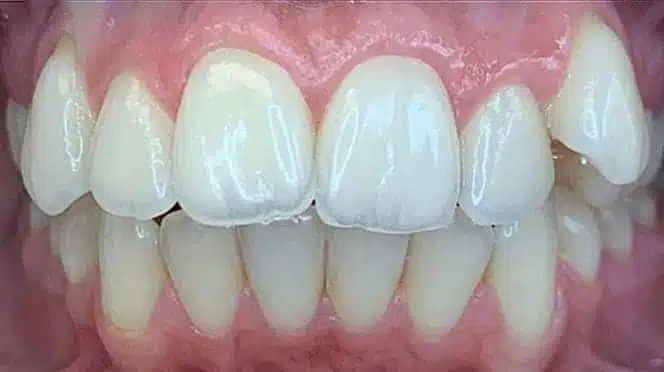
What Is Dental Crowding?
Dental crowding happens when there is not enough space in the jaw for every tooth to line up straight. Teeth twist, overlap, or push in front of or behind their neighbors as they try to find room.
Crowding can be mild, with just one or two teeth slightly rotated, or severe, with teeth stacked on top of each other. It can affect the upper arch, the lower arch, or both.
It is one of the most common reasons families and adults seek orthodontic treatment. Dr. Freelove evaluates the exact pattern and cause of crowding for each patient before recommending a treatment plan.
Dental Crowding vs. Skeletal Crowding
Not all crowding comes from the same source, and the distinction matters for treatment planning. Dental crowding means the jawbone itself is a reasonable size, but the teeth are too large for the available space or came in at odd angles.
Skeletal crowding means the jaw itself is narrow or underdeveloped, leaving too little room for a full set of teeth no matter how they are angled. This type often involves the upper jaw, the lower jaw, or both.
Telling the two apart requires seeing the bone, not just the teeth. That is why Dr. Freelove selects imaging for each patient’s clinical needs, so the plan addresses the actual cause rather than just the visible symptom.
Severity Levels: Mild, Moderate, and Severe
Before recommending a treatment, Dr. Freelove measures the exact amount of crowding in millimeters using digital models and 3D CBCT imaging. That measurement determines whether aligners alone will work, whether expansion is needed, or whether braces are the right first appliance.
Mild, Less Than 4 mm
One or two teeth slightly rotated or overlapping. Treatment options: clear aligners, limited braces, or interproximal reduction (IPR). 6–12 months.
Moderate, 4 to 8 mm
Two to three teeth overlap significantly. Hygiene noticeably impacted. Treatment: braces or full-arch aligners, often with IPR or palatal expansion. 12–18 months.
Severe, More Than 8 mm
Most teeth displaced, impacted canines common. Requires comprehensive braces; may include expansion or extractions. 18–24+ months.
What Causes Crowded Teeth?
Crowding usually comes down to a mismatch between tooth size and jaw size. Several factors can contribute.
- Genetics. Jaw size and tooth size are inherited separately, so a child can get large teeth from one parent and a smaller jaw from the other.
- Early tooth loss. When a baby tooth is lost too soon, neighboring teeth can drift into the empty space and block the permanent tooth’s path.
- Prolonged thumb sucking or pacifier use. Extended habits can narrow the upper jaw and push teeth out of alignment.
- Mouth breathing or airway restriction. Breathing through the mouth instead of the nose can affect how the jaws grow.
- Extra or delayed teeth. Extra teeth or teeth that come in late can crowd the ones already present.
Because these causes overlap, Dr. Freelove looks at growth patterns, airway, and jaw development together rather than treating crowding as a single, simple problem.
Why Crowded Teeth Matter: Health Consequences
Crowded teeth are not only a cosmetic concern. Overlapping teeth are harder to clean, since a toothbrush and floss cannot fully reach the tight spaces between them.
- Higher risk of cavities and gum disease from plaque that builds up in areas that are difficult to brush.
- Uneven bite forces that can wear down enamel unevenly or strain the jaw joint over time.
- Speech and chewing difficulty in more severe cases, when teeth interfere with normal tongue and jaw movement.
- Airway impact, since a narrow jaw that causes crowding can also narrow the airway, which is one reason Dr. Freelove reviews airway volume alongside tooth alignment.
Addressing crowding early or thoroughly can reduce these risks and make daily oral hygiene simpler to maintain.
Why Early Treatment Matters for Crowding
A child’s jaw is still growing, which gives Dr. Freelove more tools to work with than are available once growth is complete. Guiding jaw development while a child is young can create room for permanent teeth before crowding becomes severe.
Waiting until all the permanent teeth have arrived can mean the jaw has already stopped growing at a size too small for a full, straight smile. At that point, treatment options narrow to working around the existing bone rather than shaping it.
This is why the American Association of Orthodontists and most orthodontists, including Dr. Freelove, recommend an evaluation no later than age 7. Not every child needs treatment that early, but an early exam identifies developing crowding while there is still time to influence it.
How Dr. Freelove Treats Crowded Teeth
| Treatment | Best For | How It Creates Space | Starting Price |
|---|---|---|---|
| Metal Braces | All severity levels | Archwire forces | $5,000 |
| Clear Ceramic Braces | All levels (aesthetic preference) | Same mechanics, tooth-colored brackets | $5,000 |
| Invisalign | Mild to moderate | Sequential aligners + IPR if needed | $5,000 |
| Angel Aligners | Mild to moderate | Stiffer material for better force delivery | $5,000 |
| Palatal Expansion | Narrow upper jaw | Widens the jaw itself (skeletal space) | Included in phase 1 when indicated or $500 additional to comprehensive fee |
| IPR | Mild-moderate (1–3 mm needed) | Gentle enamel reshaping, 0.2–0.5 mm per contact | Included with treatment |
Freelove’s Approach to Crowding
When clinically indicated, Freelove uses an iCat CBCT scan, complimentary at the consultation, which shows in 3D whether the issue is a narrow jaw, large teeth, or both. That distinction drives the plan: expansion where the jaw is narrow, aligners or KLOwen custom braces where alignment alone solves it. Dr. Freelove plans and treats every case personally at both offices.
Phase 1 (Interceptive) Treatment for Crowded Baby Teeth
Phase 1 treatment is early intervention for children while the jaw is still developing and a mix of baby and permanent teeth are present. The goal is to guide jaw growth and create space, not to finish straightening every tooth.
For crowding specifically, this often means widening the upper jaw or holding space so permanent teeth have room to erupt in their correct position instead of twisting or getting stuck.
Not every child with crowding needs Phase 1 treatment. Dr. Freelove uses the free 3D scan taken at the consultation to determine whether early intervention will meaningfully change the outcome before recommending it.
Typical Treatment Timeline
The timeline below is a realistic range based on crowding severity. Every case is individual; Dr. Freelove confirms exact timing after digital records at the consultation.
| Severity | Braces Timeline | Aligners Timeline |
|---|---|---|
| Mild (<4 mm) | 6–12 months | 6–12 months |
| Moderate (4–8 mm) | 12–18 months | 12–18 months |
| Severe (>8 mm) | 18–24+ months | 18-24+ months |
How Long Should Crowding Treatment Really Take?
Honest ranges: mild crowding often resolves in 12 to 18 months, while comprehensive cases more commonly run 14 to 24. The variable that matters is case complexity, the same factor that sets the fee. Dr. Freelove gives a case-specific timeline in writing at the consultation, with adjustment visits every 8 to 12 weeks.
What to Expect at a Freelove Crowding Consultation
-
Digital intake (about 10 minutes)
Medical and dental history, the specific concerns the family has noticed, and goals for treatment.
-
Comprehensive records
Digital Aoralscan 3 scan of the teeth and clinical photos.
-
Diagnosis with Dr. Freelove
The doctor walks the patient or parent through the images on-screen and explains what the scans show in plain language, millimeters of crowding measured, which permanent teeth are erupting, and whether the jaw has room.
-
Every appropriate treatment option
Families receive each option Freelove Orthodontics & Smile Design considers appropriate for the case, not a single take-it-or-leave-it recommendation, so speed, aesthetics, and cost can be weighed together.
-
Exact itemized pricing
A written quote with the insurance estimate, financing options, and any discounts the family qualifies for. No same-day contract is required.
The consultation is free, and there is no obligation to start treatment at Freelove. Families across Kent and Sammamish and the surrounding communities leave the first visit knowing the severity of the crowding, the full list of options, and what each will cost.
Treatment Examples
More crowding cases are in the Freelove treated cases gallery, with severity level, treatment type, and timeline noted for each.
How Much Does It Cost to Fix Crowded Teeth at Freelove?
Metal braces: from $5,000 (comprehensive)
Clear ceramic braces: from $5,000 (comprehensive)
Angel Aligners: from $5,000 (comprehensive)
Invisalign: from $5,000 (comprehensive)
Phase 1 (early treatment): Braces from $3,050 · Angel from $4,500 · Invisalign from $4,500 · Palatal expander Included in phase 1 when indicated or $500 additional to comprehensive fee
Financing at Freelove
Freelove Orthodontics & Smile Design offers several ways to make treatment for crowding manageable, so cost does not have to be a barrier to starting care.
- In-house financing with 0% financing options and no credit check, starting from $300 down and $199 per month.
- CareCredit, with $0 down for approved credit and a 0% promotional period, subject to standard interest and credit check terms.
- Pay-in-full discount of 5% off the total treatment cost.
- HSA and FSA funds are accepted toward treatment.
The practice accepts all PPO orthodontic insurance plans and files every claim directly on the patient’s behalf. Being out-of-network with a plan does not mean paying out-of-pocket, since a plan’s lifetime orthodontic maximum usually pays the same amount whether the provider is in or out of network. Washington Apple Health (Medicaid) is accepted when orthodontic benefits apply and a medical-necessity determination is made. HMO plans other than DeltaCare are not accepted.
Common Appliances Used at Freelove
Treatment for crowding depends on whether the cause is dental, skeletal, or a mix of both, along with the patient’s age. Dr. Freelove selects from the following appliances based on what the 3D scan and exam show.
- Palatal expander (+$500). Widens a narrow upper jaw to create space for crowded teeth, planned from the practice’s CBCT scan.
- MARPE (+$1,500). For teens and adults whose palatal suture has become more resistant to expansion forces, MARPE achieves the same widening as a standard expander. It is placed in-office by Dr. Freelove with no surgeon referral needed, and it can serve as an alternative to removing teeth to resolve crowding.
- Braces and clear aligners (Invisalign or Angel Aligners). Once there is enough space, braces or aligners move the individual teeth into straight, even alignment.
- TADs (temporary anchorage devices). Small screws placed in-office that give braces or aligners extra anchorage for tooth movements that would otherwise be difficult to control, such as closing crowded spaces without shifting other teeth.


Frequently Asked Questions About Crowded Teeth
Can crowded teeth be fixed without braces?
Yes, clear aligners like Invisalign or Angel Aligners can effectively straighten teeth and correct crowding.
Do wisdom teeth cause crowding?
No. Research has shown wisdom teeth do not generate enough force to push front teeth into crowded positions. Late crowding happens naturally as the jaw narrows throughout adulthood, regardless of whether wisdom teeth are present.
How long does it take to fix crowded teeth?
Mild: 6–12 months. Moderate: 12–18 months. Severe: 18–24+ months.
Will crowded teeth get worse over time?
Yes. Crowding tends to worsen with age. The lower front teeth are especially prone to late crowding, even in adults who had straight teeth as teenagers. Without treatment, crowding increases the risk of cavities, gum disease, and abnormal wear.
Can children get early treatment for crowding?
Yes. By age 7, an orthodontist can identify whether the jaw is too narrow for incoming permanent teeth. Palatal expansion can create space for crowded teeth to erupt properly, often avoiding extractions later. Phase 1 treatment typically takes 6–12 months.
Do I need extractions?
Usually no. Freelove Orthodontics & Smile Design practices a non-extraction philosophy whenever possible, using expansion, IPR, and arch development to create space. Extractions are reserved for cases where non-extraction would compromise periodontal health, esthetics, and/or long-term stability.
Is treatment more painful with severe crowding?
No. Modern light-force mechanics produce mild soreness for 3–5 days after adjustments regardless of severity.
Related Conditions
Ready to Fix Your Crowded Teeth?
Free consultation includes severity assessment and a clear treatment recommendation with options and pricing. No obligation. Community discounts apply.