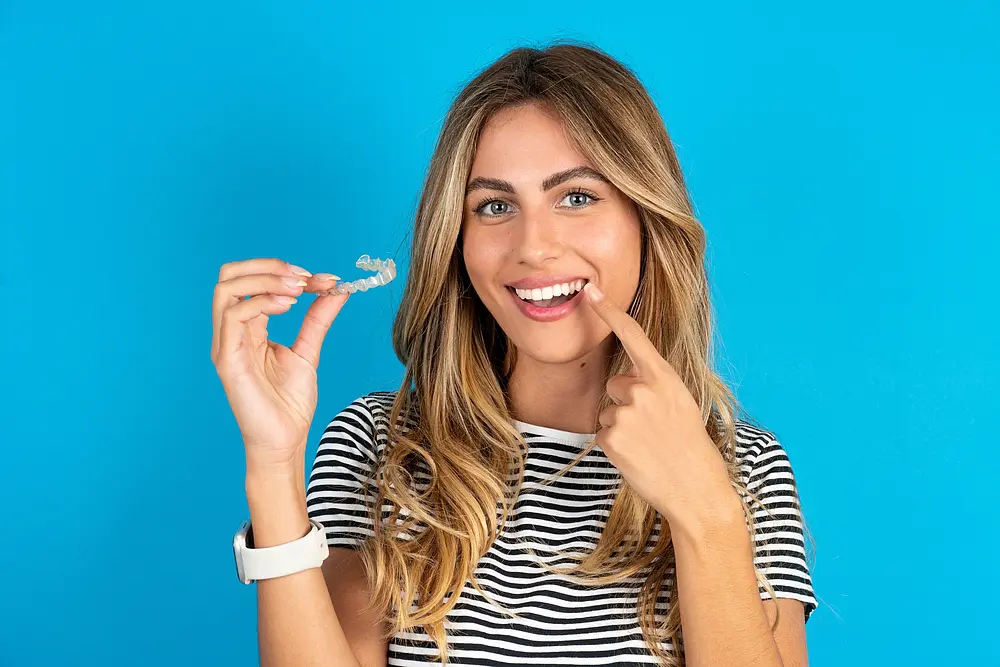
Average treatment time, the four stages of Invisalign care, and the factors that shift your personal timeline. Guidance from Freelove Orthodontics in Kent and Sammamish, WA.
Are you asking how long does Invisalign take before you see your finished smile? You are not the only one asking. It is one of the top questions patients bring to their first visit at Freelove Orthodontics, and the honest answer is that it depends on your case. This guide walks through the factors that shape your timeline so you know what to expect before you start.
Most Invisalign patients at Freelove Orthodontics finish in 12 to 18 months. Minor cases can wrap up in as little as six months, while more complex bite corrections may take two years or longer. Case severity and how consistently you wear your trays are the two biggest factors in your timeline.
Every case that comes through Freelove Orthodontics in Kent and Sammamish starts with the same question: what does this specific bite actually need? Dr. Cameron Freelove maps that out using digital scans rather than messy molds, so the estimate given at the first visit is built on real data about the patient’s teeth.
From there, the timeline is a moving target that depends on the patient as much as the plan. Two people can start Invisalign on the same day with similar-looking teeth and finish months apart, simply because one wore their trays for 22 hours a day and the other did not.

How Long Do Most People Need Invisalign?
The short answer is that every smile is different. For most adults, the average treatment time runs 12 to 18 months. Some minor cases wrap up in as little as six months, while very hard cases can take two years or more.
Your exact Invisalign treatment duration depends on your case type and the specific alignment issues involved. It also depends heavily on your compliance, meaning you wear your series of aligner trays exactly as your orthodontist instructs.
| Case Type | Typical Invisalign Duration |
| Minor case (mild spacing or crowding) | About 6 months |
| Average case (moderate misalignment) | 12 to 18 months |
| Complex case (severe crowding or bite correction) | 24 months or more |
Understanding the Invisalign Process Timeline
To understand how long your care will take, it helps to see the full journey broken into stages.
Step 1: The Planning Phase
Everything starts with a plan. Dr. Freelove maps out your smile using digital scans, not messy molds, and gives you a time estimate right in that first consultation.
Step 2: The Active Treatment Phase
This is when you begin wearing your Invisalign aligners day to day, changing them at home on the schedule your doctor sets. This is when the real work happens, and you will see your teeth shift little by little as you move through the sequence of trays.
Step 3: The Refinement Stage
Sometimes a few teeth still need a small move after the first full set of trays is finished. This is very normal. It is called refinement, and it means ordering a few more trays to fine-tune the result so your smile turns out right for the long term.
Step 4: The Retention Phase
Once your teeth are straight, you move into the retention phase. You will wear a retainer, most often at night, to keep your teeth from drifting back. You need a retainer for the long term, but it is simple to use once it becomes part of your routine.
What Determines How Long Your Invisalign Takes
Several factors change the speed of your care, and they often compound with one another.
Severity of Teeth Misalignment
A crossbite, large overbite, or underbite makes a case harder to fix, because the roots of the teeth have to move, not just the crowns. That extra mechanical work takes extra time.
Age of the Patient
Younger patients often see faster progress because their jaws are still growing and their bone is softer, which helps teeth move with less resistance. Adult bone is denser, so adults still get excellent Invisalign results, it may just take a few extra months to get there.
Patient Compliance
This is the part you control. Invisalign only works when the trays are actually in your mouth for 20 to 22 hours a day. According to a trusted family orthodontist in Leominster, MA, Dr. Granit Morina, skipping your wear time often means you will wait longer for your smile, and it can cause your teeth to shift back.
Teeth Movement Complexity
Front teeth are easier to tip or turn than molars, which are larger and anchored by stronger roots. Bite corrections also take longer than fixing a handful of crooked front teeth, and your orthodontist will walk through these specifics at your first visit.
When Invisalign May Not Be the Right Fit
Invisalign works well for most patients, but it is not automatically the right tool for every case. Significant bite problems such as a large overbite, underbite, or crossbite may need more root movement than aligners alone can efficiently manage, which can push treatment time well past the average. Patients with missing teeth or dental implants can often still use Invisalign, but the plan usually needs adjustments, and progress should be monitored closely. Switching from Invisalign to another appliance mid-treatment is possible, but it typically extends the overall timeline rather than shortening it. If daily compliance with 20 to 22 hours of wear is not realistic for your lifestyle, that is worth discussing honestly at your consultation, since it is the single biggest factor in whether your case finishes on schedule.
The Limits of an Estimate Before Your Consultation
Any timeline you read online, including the ranges in this guide, is a starting point, not a guarantee. Freelove Orthodontics gives you a real time estimate during your consultation, built from a digital scan of your own teeth and bite, and refines that plan as your treatment progresses. Your actual case may move faster or slower than the averages depending on how your teeth respond.
Can Treatment Go Faster?
While the Invisalign process has a set pace, there are ways to help it along.
- Stick to the wear schedule: aim for the full 22-hour goal every day.
- Do not miss appointments: your team needs to check your tracking.
- Use your “Chewies”: these help seat the trays tightly against your teeth.
- Keep your teeth clean: healthy gums support faster movement, so brush and floss daily.
- Switch trays on time: follow your aligner change schedule exactly.
Freelove Orthodontics also uses 3D treatment planning to help keep the process on track from the start.
Why Fix Crooked Teeth?
Misalignment affects more than appearance. An overbite or crossbite can strain your jaw and wear down enamel over time, so correcting your bite now helps you avoid pain later. Crooked teeth also create spots where food hides, which makes cavities more likely, while straight teeth are easier to keep clean. For many patients, a straight smile also brings a real boost in day-to-day confidence, whether that means feeling good at school, at work, or in photos.
Life with Invisalign: What to Expect Day to Day
Eating and Drinking
You take your aligners out to eat, so there are no food restrictions on what you can enjoy, crunchy or sticky included, as long as the trays are out first. For drinks, plain water is the only safe option while wearing your trays. Coffee and soda can stain the plastic or lead to cavities if they seep in underneath.
Cleaning Your Teeth
Plan to brush more often, ideally after every meal, since putting your trays back in over food residue can affect your teeth. A small travel toothbrush is handy for days out in Kent or Sammamish.
Talking with Aligners
A small lisp in the first day or two is normal. Your tongue simply needs to adjust to the plastic, and for most patients who talk a lot, it resolves quickly.
The Freelove Orthodontics Invisalign Process
Step 1: Schedule Your Consultation
Visit the Kent or Sammamish office for a full assessment of your teeth and bite to see if Invisalign is a good fit for you.
Step 2: Treatment Planning
Digital scans of your mouth create a map of your treatment journey, including a 3D preview of how your teeth are expected to move, so you can see your options before committing.
Step 3: Begin Treatment
Your custom aligners arrive, the fit of your first set is checked, and you leave with your wear rules, cleaning instructions, and first few trays in hand.
Step 4: Progress Monitoring
You will visit the office every 6 to 10 weeks for a quick check-in to make sure your teeth are tracking the plan. These visits matter for keeping your timeline on schedule.
Step 5: Celebrate Your New Smile
When your last tray is finished, any small bumps on your teeth are smoothed, your retainers are made, and you are ready to show off the result.
How Much Does Invisalign Cost?
Cost depends on the complexity of your case and your duration of care. On average, a full Invisalign case at Freelove Orthodontics runs between $3,500 and $7,000, with minor cases needing less time typically costing less. A full breakdown is provided at your consultation.
Insurance and Financing
- Insurance: many plans in Washington cover part of orthodontic treatment cost, and the office will check your benefits for you.
- Payment Plans: monthly plans are available to fit different budgets.
- HSA and FSA: these accounts can be used to pay with pre-tax money.
Frequently Asked Questions
Can I switch between Invisalign and metal braces if needed?
In most cases, your orthodontist plans your Invisalign treatment specifically for your bite from the start. Switching mid-treatment is possible but may extend your timeline. Your doctor will discuss the best approach at your consultation.
Can I get Invisalign if I have missing teeth or dental implants?
Yes, Invisalign can often accommodate missing teeth or implants, though the plan may need adjustments. Your orthodontist evaluates your case during the planning phase, and regular check-ins help confirm your teeth are moving as expected.
How do I maintain my results after treatment?
Retainers are essential. Wearing your retainer as prescribed, usually at night, prevents your teeth from shifting back. This is a long-term commitment, and staying consistent with your retainer schedule keeps your results within the timeframe your doctor outlined.
How much does Invisalign cost at Freelove Orthodontics?
A full case typically runs between $3,500 and $7,000, depending on complexity and treatment length. The office reviews insurance, monthly payment plans, and HSA or FSA options at your consultation.
How often will I need to visit the office during treatment?
Most patients come in every 6 to 10 weeks for a progress check. These visits confirm your teeth are tracking the plan and give your doctor a chance to catch anything that might affect your timeline early.
Sources. Freelove Orthodontics clinical guidance, and commentary from Dr. Granit Morina, orthodontist in Leominster, MA, on the effect of aligner wear-time compliance on treatment duration.

Related Reading
- Clear Braces vs Metal Braces in Kent and Sammamish, WA
- How Does Invisalign Work in Kent and Sammamish, WA
- TMJ Treatment in Kent and Sammamish, WA
- How to Get Braces Glue Off Teeth in Kent and Sammamish, WA
- How to Floss with Braces in Kent and Sammamish, WA
Start Your Journey with Confidence
Still have questions about how long your treatment will take? At Freelove Orthodontics, we build a plan just for you and walk through a realistic timeline before you ever start. Schedule your consultation today, or reach out through our contact page. Our team will look at your bite, give you a clear roadmap, and talk through payment options to keep your care on track.
Every new-patient consultation at Freelove Orthodontics is free, with no obligation to start treatment.